Kuka päivitti Robert Dudley, 1st Earl of Leicester?
Elizabeth I of England päivitti Robert Dudley, 1st Earl of Leicester ?: sta ?.: ään Ikäero oli 1 vuotta, 2 kuukautta ja 24 päivää.
Douglas Sheffield, Baroness Sheffield päivitti Robert Dudley, 1st Earl of Leicester ?: sta ?.: ään
Robert Dudley, 1st Earl of Leicester
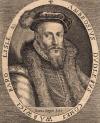
Robert Dudley, 1st Earl of Leicester (24 June 1532 – 4 September 1588) was an English statesman and the favourite of Elizabeth I from her accession until his death. He was a suitor for the queen's hand for many years.
Dudley's youth was overshadowed by the downfall of his family in 1553 after his father, the Duke of Northumberland, had failed to prevent the accession of Mary I. Robert Dudley was condemned to death but was released in 1554 and took part in the Battle of St. Quentin under Mary's husband and co-ruler, Philip, which led to his full rehabilitation, but also to the death of his older brother Henry. On Elizabeth I's accession in November 1558, Dudley was appointed Master of the Horse. In October 1562, he became a privy councillor and, in 1587, was appointed Lord Steward of the Royal Household. In 1564, Dudley became Earl of Leicester and, from 1563, one of the greatest landowners in North Wales and the English West Midlands by royal grants.
The Earl of Leicester was one of Elizabeth's leading statesmen, involved in domestic as well as foreign politics alongside William Cecil and Sir Francis Walsingham. Although he refused to be married to Mary, Queen of Scots, Leicester was for a long time relatively sympathetic to her until, from the mid-1580s, he urged her execution. As patron of the Puritan movement, he supported non-conforming preachers but tried to mediate between them and the bishops of the Church of England. A champion also of the international Protestant cause, he led the English campaign in support of the Dutch Revolt (1585–1587). His acceptance of the post of governor-general of the United Provinces infuriated Queen Elizabeth. The expedition was a military and political failure, and it ruined Leicester financially. Leicester was engaged in many large-scale business ventures and was one of the main backers of Francis Drake and other explorers and privateers. During the Spanish Armada, Leicester was in overall command of the English land forces. In this function, he invited Queen Elizabeth to visit her troops at Tilbury. This was the last of many events he had organised over the years, the most spectacular being the festival at his seat Kenilworth Castle in 1575 on the occasion of a three-week visit by the Queen. Leicester was a principal patron of the arts, literature, and the Elizabethan theatre.
Leicester's private life interfered with his court career and vice versa. When his first wife, Amy Robsart, fell down a flight of stairs and died in 1560, he was free to marry the queen. However, the resulting scandal very much reduced his chances in this respect. Popular rumours that he had arranged for his wife's death continued throughout his life, despite the coroner's jury's verdict of accident. For 18 years he did not remarry for Queen Elizabeth's sake and when he finally did, his new wife, Lettice Knollys, was permanently banished from court. This and the death of his only legitimate son and heir were heavy blows. Shortly after the child's death in 1584, a virulent libel known as Leicester's Commonwealth was circulated in England. It laid the foundation of a literary and historiographical tradition that often depicted Leicester as the Machiavellian "master courtier" and as a deplorable figure around Elizabeth I. More recent research has led to a reassessment of his place in Elizabethan government and society.
Lue lisää...Elizabeth I of England

Elisabet I (7. syyskuuta 1533 Greenwichin palatsi, Greenwich, Englannin kuningaskunta – 24. maaliskuuta 1603 Richmondin palatsi, Surrey, Lontoo) oli Englannin ja Irlannin kuningatar vuosina 1558–1603. Elisabet I oli viides ja viimeinen Tudorin suvun monarkki.
Hänen valtakautensa ajoittui katolisuuden ja protestanttisuuden välisten kamppailujen aikaan. Elisabet I on yksi Englannin menestyksekkäimmistä monarkeista, jonka valtakaudella Englanti nousi eurooppalaiseksi suurvallaksi sekä politiikan, talouden että kulttuurin saralla.
Elisabet oli kuningas Henrik VIII:n ja silloisen kuningatar Anna Boleynin tytär. Elisabet nimettiin kuningattareksi 17. marraskuuta 1558 sisarpuolensa Maria I:n kuoltua. Elisabet kuoli 24. maaliskuuta 1603 ja seuraajaksi nousi Skotlannin Jaakko VI nimellä Jaakko I. Elisabet ei saanut lapsia eikä mennyt naimisiin; osin tästä syystä hänestä käytetään nimitystä neitsytkuningatar.
Elisabet I oli pisimpään hallinnut Tudorin suvun monarkki. 44 vuotta kestäneen valtakauden aikana Elisabet maltillisesti vakiinnutti Englantia protestanttiseksi maaksi. Vuonna 1570 paavi Pius V julisti Elisabetin kerettiläiseksi eli ekskommunikaatioon, mitä seurasi lukuisia epäonnistuneita salamurhayrityksiä. Myös sotapolitiikassa Elisabet toimi maltillisesti, eikä valtakaudella käyty suuria sotia. Julistamattoman Anglo-Espanja-sodan (1585–1604) suurimmassa taistelussa Englanti voitti Espanjan niin kutsutun Voittamattoman armadan. Edeltäviin ja seuraaviin valtakausiin verrattuna Elisabetin valtakausi oli sisäisen rauhan aikaa. Englanti ei juurikaan kärsinyt sodista kotisaarellaan tai Euroopan mantereella vaan suurimmat taistelut käytiin Amerikoissa ja merillä. Englannin talous hyötyi kehittyvästä transatlanttisesta, varsinkin orjakaupasta.
Vuonna 2008 brittiläiseltä ullakolta löydettiin maalaus, joka esittää nuorta Elisabetia. Arvioiden mukaan hän olisi ollut kuningatar vain vuoden maalauksen valmistuessa. Taulu on harvinainen, ja sen alta paljastui aikaisempi versio maalauksesta, joka todennäköisesti ei ole miellyttänyt taiteilijaa tai kuningatarta itseään. Päällimmäiseen versioon Elisabetille oli lisätty muun muassa Raamattu.
Lue lisää...Robert Dudley, 1st Earl of Leicester
Douglas Sheffield, Baroness Sheffield
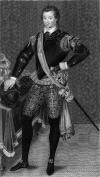
Douglas, Lady Sheffield (née Howard; 1542/1543 – 1608), was an English noblewoman, the lover of Robert Dudley, 1st Earl of Leicester and mother by him of explorer-cartographer Sir Robert Dudley, an illegitimate son.
Seventeen years after Leicester's death she claimed in litigation that she had secretly been his wife, although she had herself remarried while Leicester was still alive.
Lue lisää...