Kuka päivitti Alexander the Great?
Hephaestion päivitti Alexander the Great ?: sta ?.: ään
Barsine päivitti Alexander the Great ?: sta ?.: ään
Cleophis päivitti Alexander the Great ?: sta ?.: ään
Bagoas päivitti Alexander the Great ?: sta ?.: ään
Campaspe päivitti Alexander the Great ?: sta ?.: ään
Alexander the Great

Alexander III of Macedon (Ancient Greek: Ἀλέξανδρος, romanized: Aléxandros; 20/21 July 356 BC – 10/11 June 323 BC), most commonly known as Alexander the Great, was king of the ancient Greek kingdom of Macedon. He succeeded his father Philip II to the throne in 336 BC at the age of 20, and spent most of his reign conducting a lengthy military campaign throughout Asia and Egypt. By the age of 30, he had created one of the largest empires in history, stretching from Greece to northwestern India. He was undefeated in battle and is widely considered to be one of history's greatest and most successful military commanders.
Born in Pella, Macedon, Alexander was tutored by philosopher and polymath Aristotle until the age of 16. In 335 BC, shortly after assuming the throne of Macedon, he launched a campaign in the Balkans and reasserted control over Thrace and parts of Illyria before marching on the city of Thebes, which was subsequently destroyed. Alexander then assumed leadership of the League of Corinth, created by his father.
With this authority over all Greeks he launched a pan-Hellenic invasion of the Persian Achaemenid Empire in 334 BC, and with it began a series of campaigns which lasted for ten years. Following his conquest of Asia Minor and a series of decisive battles, particularly at Issus and Gaugamela, the power of the Achaemenid Empire was broken. He subsequently overthrew Darius III and conquered the Achaemenid Empire in its entirety. After the fall of Persia, the Macedonian Empire held a vast swath of territory between the Adriatic Sea and the Indus River. Alexander endeavored to reach the "ends of the world and the Great Outer Sea" and invaded India in 326 BC, achieving an important victory over Porus, an ancient Indian king of present-day Punjab, at the Battle of the Hydaspes. Facing mutiny from troops, he was eventually forced to turn back at the Beas River, and later died in 323 BC in Babylon, Mesopotamia, the city which he had planned to make the capital of his empire, while on his return to Greece. Alexander's death put an end to his planned invasion of Arabia.
In the years following his death, a series of civil wars broke out across the Macedonian Empire, eventually leading to its disintegration at the hands of the Diadochi. Alexander's death marks the conventional beginning of the Hellenistic period. Through his conquests, he built a legacy that includes the cultural diffusion and syncretism, which gave rise to Greco-Buddhism and Hellenistic Judaism. He founded more than twenty cities, with the most prominent being the city of Alexandria in Egypt. Alexander's establishment of Greek colonies and the spreading of Greek culture led to Hellenistic civilization becoming a major force in the ancient world, influencing regions as far east as the Indian subcontinent. The Hellenistic period developed through the Roman Empire into modern Western culture; the Greek language became the lingua franca of the region and was the predominant language of the Byzantine Empire until its collapse in 1453 AD.
Alexander became a legendary hero similar to Achilles, featuring prominently in the historical and mythical traditions of both Greek and non-Greek cultures. His military achievements and successes in battle made him the touchstone against which many later military leaders would judge themselves. His tactics remain a significant subject of study in military academies worldwide. Legends of Alexander's exploits were coalesced into the 3rd century Alexander Romance which, in the premodern period, went through over one hundred recensions, translations, and derivations and was translated into almost every European vernacular and every language of the Islamic world. After the Bible, it was the most popular form of European literature.
Lue lisää...Hephaestion
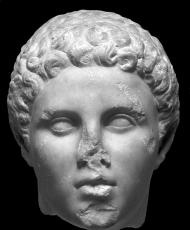
Hefaistion (m.kreik. Ἡφαιστίων, Hēfaistiōn, lat. Hephaestion; n. 356 eaa. – syksy 324 eaa.) oli makedonialainen aristokraatti, Amyntorin poika. Arrianoksen mukaan hän syntyi Makedonian pääkaupungissa Pellassa. Hänet tunnetaan Aleksanteri Suuren läheisimpänä ystävänä, toisena komentojärjestyksessä ja mahdollisesti Aleksanterin rakastajana. On mahdollista, että Aleksanteri ja Hefaistion tapasivat Miezassa ollessaan Aristoteleen oppilaana muiden ylhäisöön kuuluneiden poikien kanssa. Aristoteles kirjoitti Hefaistionille joukon kirjeitä, joten he ovat tavanneet ja olleet yhteyksissä toisiinsa.
Hefaistion seurasi Aleksanterin mukana, kun tämä valloitti Persian valtakunnan. Aleksanterin ja Hefaistionin ystävyyttä korostetaan monessa lähteessä. Muun muassa he uhrasivat yhdessä Troijassa. Tunnettu anekdootti kertoo, että Issoksen taistelun jälkeen Dareios III:n vaimo Statira luuli Hefaistionia Aleksanteriksi ja kumarsi tämän edessä. Issoksen jälkeen Hefaistion johti muun muassa Aleksanterille antautuneiden foinikialaisten laivastoa. Ennen Gaugamelan taistelua Hefaistion nimitettiin yhdeksi Aleksanterin seitsemästä henkivartijasta (somatofylakes).
Vuonna 330 eaa. Hefaistion ja Krateros saivat jakaa makedonialaisen toveriratsuväen komennon. Tähän asti Filotas oli johtanut ratsuväkeä, mutta hänet teloitettiin epäiltynä salajuonesta. Kraterosta pidettiin yleisesti yhtenä parhaista makedonialaisupseereista. Hefaistionilla taas ei ollut yhtä paljon kokemusta. Hefaistionia ja Kraterosta kuvaillaan usein niin että Hefaistion rakasti Aleksanteria, Krateros taas rakasti kuningasta.
Kun armeija palasi Intian sotaretkeltään, järjesti Aleksanteri suuret häät Susassa. Tärkeimmät makedonialaiset upseerit menivät naimisiin persialaisten aristokraattien tyttärien kanssa. Hefaistion nai Dareios III:n tyttären Drypetisin.
Hefaistion kuoli Ekbatanassa lokakuussa 324 eaa. Aleksanteri suri suuresti ystäväänsä. Plutarkhoksen mukaan Aleksanteri Hefaistionin kuoleman jälkeen leikkautti kaikkien hevosten ja muulien harjat, revitytti kaupunkien muurien rintavarustuksia, ristiin naulitsi syyttömän lääkärin, kielsi kaikki säveltaiteelliset esitykset, aloitti sodan kossaialaisten heimoa vastaan ja aikoi rakennuttaa tälle valtavan mausoleumin, jota kuitenkaan ei ehditty rakentaa ennen kuin Aleksanteri itse kuoli vuonna 323 eaa.
Erään teorian mukaan Amfipoliin niin kutsuttu Kastán hauta olisi Hefaistionin hauta. Tämä perustuu ennen kaikkea haudasta löydetystä monogrammista tehtyyn tulkintaan, jonka mukaan kyseessä olisi Hefaistionin monogrammi.
Lue lisää...Alexander the Great
Barsine
Barsine (Βαρσινη, noin 363 eaa.-309 eaa.) oli persialaisen satraapin Artabazoksen vanhin tytär. Barsine oli Aleksanteri Suuren rakastajatar ja he saivat yhdessä pojan Herakleen.
Barsine meni jo nuorena naimisiin rodoslaisen Mentorin kanssa. Barsinen isä joutui pakenemaan perheineen Makedoniaan Filippos II:n hoviin vuonna 354 eaa. sen jälkeen kun hän oli kapinoinut kuningas Artakserkses III:a vastaan. Barsine tapasi luultavasti Filippoksen pojan Aleksanterin ja tämän opettajan Aristoteleen. Mentorin ansiosta Artakserkses armahti Artabazoksen ja tämä sai palata Persiaan. Mentor kuoli kuitenkin pian tämän jälkeen ja Barsine meni uusiin naimisiin Mentorin veljen Memnonin kanssa.
Aleksanteri Suuri hyökkäsi Persiaan vuonna 334 eaa. ja aluksi persialaisia joukkoja häntä vastaan johti Memnon ja myöhemmin Barsinen veli Farnabazos. Barsine joutui viettämään tämän ajan Dareios III:n hovissa. Issoksen taistelun jälkeen Aleksanteri sai vangiksi Dareioksen perheen ja myös Barsinen. Plutarkhoksen mukaan kenraali Parmenion suostutteli Aleksanterin ottamaan Barsinen rakastajattarekseen. Barsine poikkesi muista persialaisnaisita siinä että osasi kreikkaa ja tunsi makedonialaisten tavat.
Vuonna 327 eaa. Barsine synnytti Aleksanteri Suurelle pojan jolle annettiin nimeksi Herakles. Pian tämän jälkeen Aleksanteri kuitenkin otti vaimokseen Roksanen. Barsine palasi länteen ja hän asettui poikansa kanssa asumaan Pergamoniin. Vuonna 324 eaa. hän meni naimisiin Aleksanterin amiraalin ja lapsuudenystävän Nearkhoksen kanssa.
Aleksanterin kuoltua Nearkhos ehdotti Heraklesta Makedonian kuninkaaksi, mutta diadokit eivät suostuneet tähän koska tämä oli pojan isäpuoli. Vuonna 309 eaa. Polyperkhon yritti tehdä Herakleesta Makedonian kuninkaan, mutta tämä epäonnistui. Barsine ja Herakles teloitettiin pian tämän jälkeen.
Lue lisää...Alexander the Great
Cleophis

Cleophis (Sanskrit: Kripa ) was an Assacani queen and key figure in the war between the Assacani people and Alexander the Great. Cleophis was the mother of Assacanus, the Assacanis' war-leader at the time of Alexander's invasion in 326 BCE. After her son's death in battle, Cleophis assumed command and negotiated a settlement that allowed her to retain her status. Later accounts claim Cleophis had a son by Alexander, a notion dismissed by historians.
The Assacani (called Ashvakas in Sanskrit, from the word Ashva, meaning "horse") were an independent people who lived in parts of the Swat and Buner valleys in ancient Gandhara. These highlanders were rebellious, fiercely independent clans who resisted subjugation.
Lue lisää...Alexander the Great
Bagoas

Bagoas (altpersisch Bagoi; altgriechisch Βαγώας; † nach 324 v. Chr.) war ein Günstling am persischen Königshof und im Gefolge Alexanders des Großen im 4. vorchristlichen Jahrhundert. Er ist nicht zu verwechseln mit dem gleichnamigen Hofminister.
Lue lisää...Alexander the Great
Campaspe
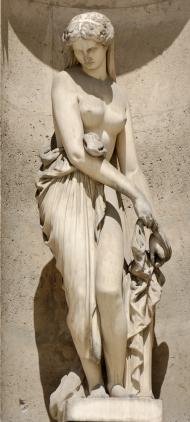
Campaspe (d'après Claude Élien) ou Pancaspé (d'après Pline l'Ancien (latin : Panscapen) passe pour avoir été une maîtresse d'Alexandre le Grand et le modèle du peintre Apelle. Son existence est probablement une légende, elle est surtout connue par une anecdote apocryphe de Pline l'Ancien qui a été le sujet de nombreuses représentations artistiques.
Lue lisää...