Kuka päivitti Mary Robinson (poet)?
Charles James Fox päivitti Mary Robinson (poet) ?: sta ?.: ään Ikäero oli 9 vuotta, 10 kuukautta ja 3 päivää.
Banastre Tarleton päivitti Mary Robinson (poet) ?: sta ?.: ään Ikäero oli 4 vuotta, 3 kuukautta ja 6 päivää.
George IV of the United Kingdom päivitti Mary Robinson (poet) ?: sta ?.: ään Ikäero oli 3 vuotta, 8 kuukautta ja 16 päivää.
George Capel-Coningsby, 5th Earl of Essex päivitti Mary Robinson (poet) ?: sta ?.: ään Ikäero oli 1 vuotta, 0 kuukautta ja 14 päivää.
Mary Robinson (poet)

Mary Robinson (née Darby; 27 November 1757 – 26 December 1800) was an English actress, poet, dramatist, novelist and celebrity figure. She lived in England, in the cities of Bristol and London; she also lived in France and Germany for a time. She enjoyed poetry from the age of seven and started working, first as a teacher and then as an actress, from the age of 14. She wrote many plays, poems and novels. She was a celebrity, gossiped about in newspapers, famous for her acting and writing. During her lifetime she was known as "the English Sappho". She earned her nickname "Perdita" for her role as Perdita (heroine of Shakespeare's The Winter's Tale) in 1779, and was the first public mistress of King George IV while he was still Prince of Wales. Robinson is the author of the Gothic novels Vancenza; or, the Dangers of Credulity (1792) and Hubert de Sevrac (1796).
Lue lisää...Charles James Fox

Charles James Fox PC (24. tammikuuta 1749 – 13. syyskuuta 1806) oli merkittävä brittiläinen Whig-puolueeseen kuulunut valtiomies, jonka parlamentaarinen ura kesti 38 vuotta 1700-luvun lopulla ja 1800-luvun alussa. Hän oli tunnettu erityisesti William Pitt nuoremman pääkilpailijana. Fox nousi merkittävään asemaan parlamentin alahuoneessaissa vaikuttavana puhujana, jolla oli värikäs ja huonomaineinen yksityiselämä, mutta perinteiset ja konservatiiviset mielipiteet. Foxin mielipiteiden muuttuminen radikaaleiksi oli hänen mentorinaan toimineen Whig-poliitikko Edmund Burken vaikutusta.
Foxista tuli tyrannina pitämänsä kuninkaan Yrjö III:n huomattava ja vankkumaton vastustaja. Hän kannatti Amerikan vallankumouksellisia ja pukeutui usein Yhdysvaltojen George Washingtonin armeijan väreihin. Fox toimi ulkoasiainministerinä lyhyen ajan Rockinghamin markiisin hallituksessa 1782 ja koalitiohallituksessa yhdessä Frederick Northin kanssa 1783. Kuningas pakotti Northin ja Foxin pois hallituksesta ennen vuoden loppua ja korvasi heidät Pitt nuoremmalla. Seuraavat 22 vuotta Pitt oli hallituksessa ja Fox oppositiossa.
Fox toimi lähes koko poliittisen uransa oppositiossa. Hänestä tuli tunnettu orjuuden vastustaja, Ranskan suuren vallankumouksen ja Irlannin itsenäisyyden kannattaja sekä parlamentin johtava uskonnollisen suvaitsevaisuuden ja henkilökohtaisen vapauden puolestapuhuja. Foxin ystävyys Edmund Burken kanssa ja hänen uskottavuutensa parlamentissa kärsivät hänen kannatettuaan Ranskaa Ranskan vallankumoussodissa. Fox vastusti Pittin sodanaikaista lainsäädäntöä ja puolusti uskonnollisten vähemmistöjen sekä poliittisten ääriryhmien oikeuksia. Pittin kuoltua tammikuussa 1806 Foxista tuli William Wyndham Grenvillen hallituksen ulkoasiainministeri, mutta hän kuoli itse puolisen vuotta myöhemmin.
Lue lisää...Mary Robinson (poet)
Banastre Tarleton

General Sir Banastre Tarleton, 1st Baronet, (21 August 1754 – 15 January 1833) was a British military officer and politician. He was the leader of the British Legion during the southern campaign of the American War of Independence.
After promotion to lieutenant colonel, he later served in Portugal and held commands in Ireland and England, eventually reaching the rank of General in his later years.
After returning to Great Britain in 1781, Tarleton was elected to Parliament as a member for Liverpool. He served as a prominent Whig politician for 20 years.
Lue lisää...Mary Robinson (poet)
George IV of the United Kingdom
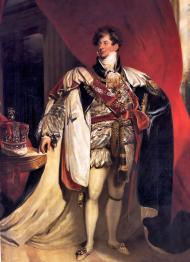
George IV (George Augustus Frederick; 12 August 1762 – 26 June 1830) was King of the United Kingdom of Great Britain and Ireland and King of Hanover from 29 January 1820 until his death in 1830. At the time of his accession to the throne, he was acting as prince regent for his father, King George III, having done so since 5 February 1811 during his father's final mental illness.
George IV was the eldest child of King George III and Queen Charlotte. He led an extravagant lifestyle that contributed to the fashions of the Regency era. He was a patron of new forms of leisure, style and taste. He commissioned John Nash to build the Royal Pavilion in Brighton and remodel Buckingham Palace, and commissioned Jeffry Wyatville to rebuild Windsor Castle. George's charm and culture earned him the title "the first gentleman of England", but his dissolute way of life and poor relationships with his parents and his wife, Caroline of Brunswick, earned him the contempt of the people and dimmed the prestige of the monarchy. He excluded Caroline from his coronation and asked the government to introduce the unpopular Pains and Penalties Bill in an unsuccessful attempt to divorce her.
George's rule was tarnished by scandal and financial extravagance. His ministers found his behaviour selfish, unreliable and irresponsible, and he was strongly influenced by favourites. During most of George's regency and reign, Lord Liverpool controlled the government as prime minister of the United Kingdom. Liverpool's government presided over Britain's ultimate victory over Napoleon and negotiated a peace settlement with the French. After Liverpool's retirement, George was forced to accept Catholic emancipation despite opposing it. His only legitimate child, Princess Charlotte, predeceased him in 1817, as did his childless younger brother Prince Frederick in 1827, so he was succeeded by another younger brother, William IV.
Lue lisää...Mary Robinson (poet)
George Capel-Coningsby, 5th Earl of Essex

George Capel-Coningsby, 5th Earl of Essex FSA (13 November 1757 – 23 April 1839) was an English aristocrat and politician, and styled Viscount Malden until 1799. His surname was Capell until 1781.
Lue lisää...